

Nature can sometimes hold very dangerous surprises for humans. In this article we make you discover a particular type of tree that will never be touched during a storm. Here are the details.
The natural world will not always be harmless to humans. We are all aware of the danger of encountering different animal species. However, not everyone knows that an important risk factor also refers to the presence of some specific plants or trees.
Those who own a garden or terrace will grow only well-known plants and flowers and in any case will always be informed by experts in the field about the right moves to take. Each plant, in fact, has specific characteristics and will need the right precautions to grow at its best at each stage of the season.
Many people grow fruit trees in the garden or grow vegetables on the balcony or in a small space specially designed for this purpose. Providing plants with the right fertilizer and adopting the right techniques in reference to sun exposure and watering are very important aspects to better treat all these elements.
In this article, however, we do not want to give indications on this subject, but rather allow you to discover the risks that there may be for humans in case you come across a particular tree during storms. Let’s find out all about the so-called tree of death and why it should never be touched. Here are the details.
The Tree of Death: Never Touch It During the Rain
The name alone is terrifying: tree of death. This name is terrifying just to read and makes clear the risks that are run for man by its mere presence. The scientific name of this tree Hippomane mancinella. As with all botanicals, it is always necessary to be well informed about the best strategies to adopt in their presence.
Many people judge this tree to be the most dangerous in the world. Fortunately, it is not part of the Italian territory, but only of a specific land area. It can only be found on a few Caribbean islands and in specific areas of Latin America and Florida.
If you go to one of these places, it is very important to know the dangers of this tree, especially during rains and thunderstorms.
The dangers caused by this plant are related to the leakage of the branches, leaves, and bark of a particular sticky resin. If it gets on the skin, it could cause severe burns and other serious problems. In contact with the eyes, then, blindness would be almost assured.
The additional risks, then, would be even greater if you touched the tree or were in the vicinity of it in the event of a simple storm or rain. Let’s find out why.
Never touch this tree: walk away now
With the rain, then, the leakage of this sticky white resin could be even greater. The advice, therefore, is to know the risks associated with this movement and never, ever take shelter under this tree in case of rain. Let’s discover the other dangers associated with the tree of death.
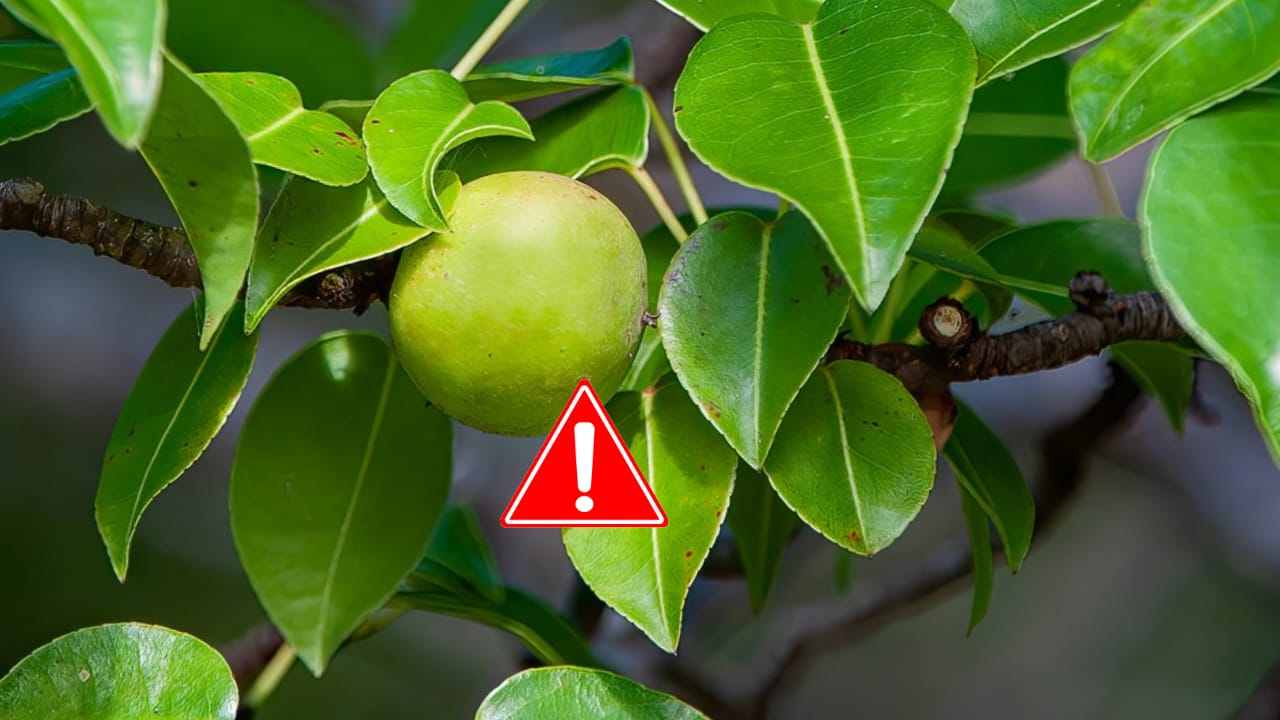
We have mentioned the danger of this resin, but the risks related to this tree did not end here. Like all trees, in fact, even the so-called tree of death produces particular fruits. The shape of them resembles that of apples, but the benefits will not be the same.
The ingestion of this fruit, in fact, will cause a very strong and prolonged burning sensation in the throat in humans. In severe cases, symptoms can be vomiting, powerful dysentery, and even death, due to total dehydration.
In the areas where these trees are present, everyone will be informed of the great dangers that are run. In fact, informative posters will always be located detailing the presence of the mancinella Hippomane and the risks related to it.
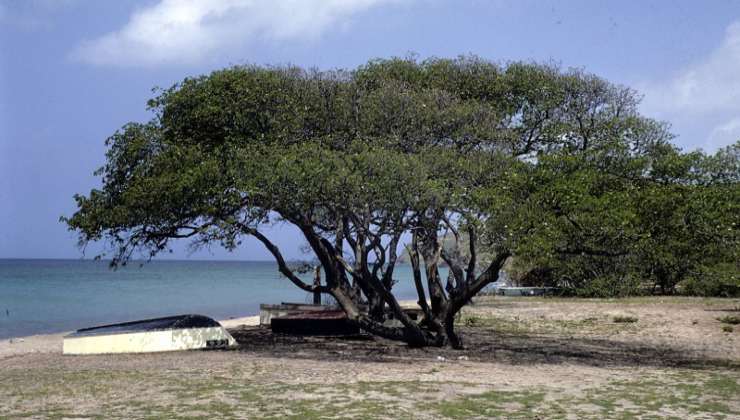
Hippomane mancinella poses a very high danger to humans, but it is critical to the entire coastal ecosystem of those areas. In fact, it has imposing dimensions and shelters from strong winds, protecting the coast from the erosion process.


