

Like all household appliances, the washing machine requires regular maintenance. This not only increases washing efficiency, but also makes equipment last and limits energy expenditure. Find out how to clean the inside of your washing machine so you don’t pay a high electricity bill.
The dirt and scale deposits that cover the washing machine not only impact the life of your equipment, but also the laundry by staining it. Plus, they drive up the electricity bill.
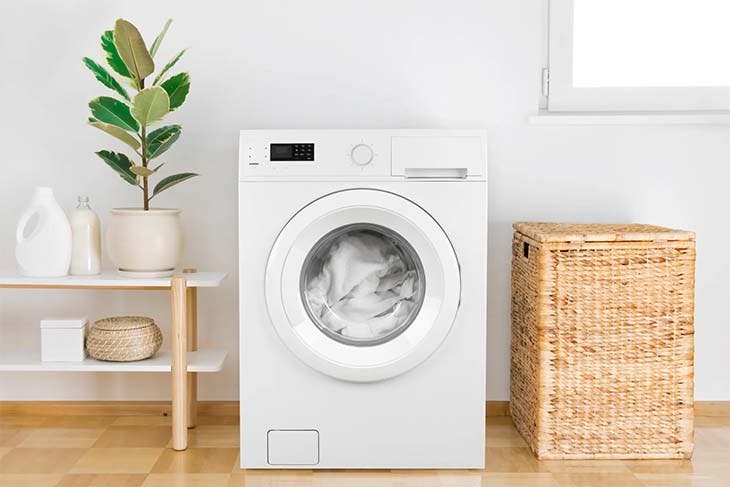

Washing machine – Source: spm
Why is a scaled-up washing machine energy-intensive?
The water used by the washing machine is hard water, that is to say water rich in minerals such as calcium and magnesium, which are responsible for the formation of limescale. The use of hard water leads to scale deposits in household appliances such as, among others, the washing machine or the dishwasher. And since limestone is a good thermal insulator , the water takes longer to heat up and this is what leads to energy overconsumption. Moreover, a scale deposit of only one millimeter on the resistance of a household appliance is sufficient to increase energy consumption by 16%. Moreover, when the resistance of a washing machine is scaled, it can overheat and cause failure.
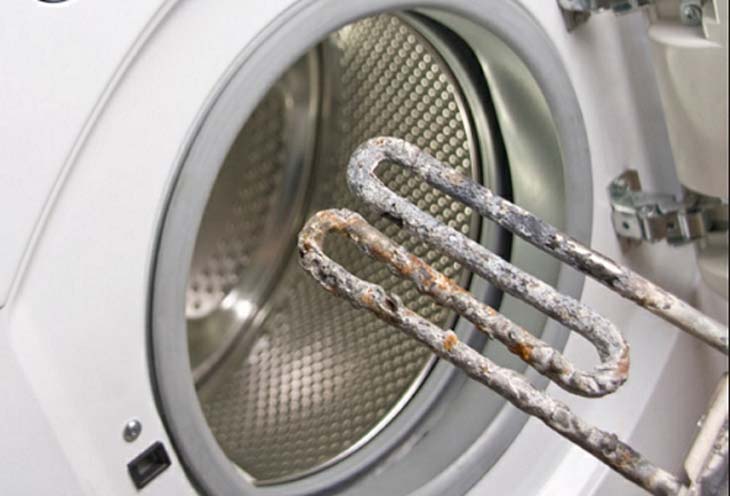
Scaled resistance of a washing machine – Source: spm
In addition to reducing the energy performance of the washing machine, hard water also reduces the effectiveness of detergents , and thus forces us to increase the dosage of the detergent. Not to mention that when lime deposits on the fibers of the laundry, it makes the clothes rough and can even damage them. Hence the need to descale the interior of the washing machine. Moreover, scale is the enemy of all your household equipment: water heater, dishwasher, kettle, coffee maker, and even the iron! Indeed, scale clogs the soleplate of your iron and stains your laundry during ironing. The ultimate solution to get rid of scale remains the installation of a water softener. Although this solution is expensive, it prevents scale deposits by relieving the water of calcium and magnesium ions.
How to clean the inside of the washing machine so as not to pay a high electricity bill?
-
White vinegar
To descale, degrease and disinfect your washing machine, use white vinegar. This natural scale remover will help you easily dislodge limescale deposits that increase the electricity bill and stain the laundry. To do this, distribute a glass of white vinegar in the detergent drawer and the drum and run an empty wash cycle at 90°. This cleaning should be done once a month to keep your equipment clean, without traces of limescale.
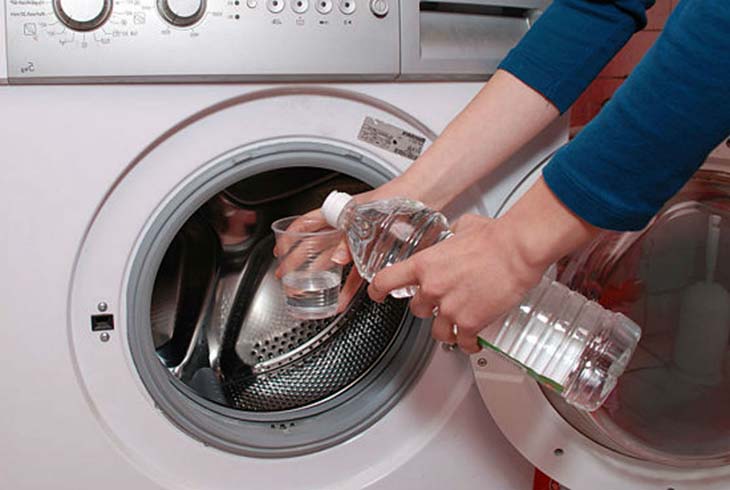
White vinegar to descale the washing machine – Source: spm
-
Citric acid
Citric acid is a natural and ecological descaling agent that is very effective in removing tartar deposits in a short time. To do this, simply pour 2 tablespoons of citric acid into the drum and run a program at 60°. Another option is to mix baking soda with a little citric acid and pour the mixture into the drum. Then rotate the machine empty, at 90°.
-
Baking soda
Baking soda is also a natural limescale remover. You can use it to remove the limescale accumulated in your washing machine and also deodorize your household appliance . To do this, pour 2 tablespoons of baking soda into the drum and add 100 ml of white vinegar to the detergent drawer. Then run a 60° programme.
While cleaning the drum, don’t forget the seals too. In a container, mix the baking soda with a little water to form a paste, and using an old toothbrush, scrub the joint to remove residues of detergent, mold, dirt and deposits of tartar. Then wipe the joint with a cloth soaked in white vinegar.
These tips will allow you to effectively clean and descale your washing machine to improve the performance of your household appliance, but also to save money on your energy bill.


