

Sometimes it can happen that the pressure of the shower head or sink faucet starts to decrease over time. Fortunately, it is possible to remedy this without resorting to the expertise of a plumber, thanks to a simple and effective method.
If you find that your water flow is much less than before, know that you can increase the flow with some clever measures that will likely save you plumbing costs. Either way, whether it’s in the shower, tub, sink, or faucet, you’re probably dealing with scale that’s preventing water from flowing normally. Here’s how to get rid of it and the steps you can take to avoid this kind of scenario.
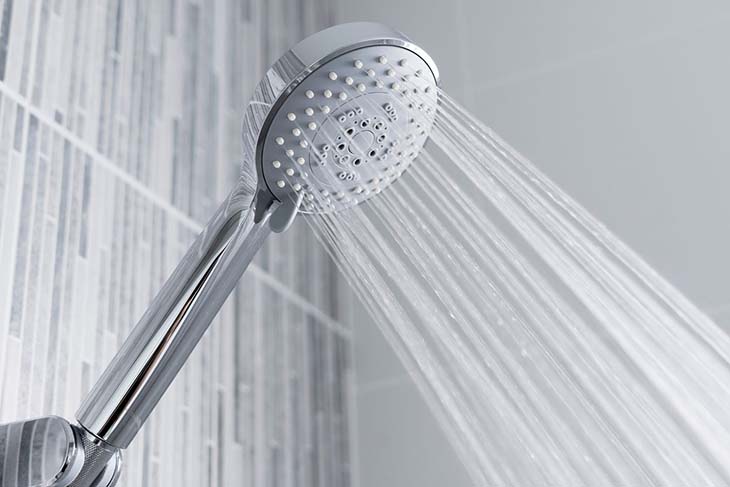

Sprinkler – Source: spm
What to do to increase the pressure of the shower heads?
-Cleaning
If the pressure of the shower head has decreased, it is most likely due to a build-up of limescale in its small holes. To descale it, you will need two things: a bottle of white vinegar and a container.
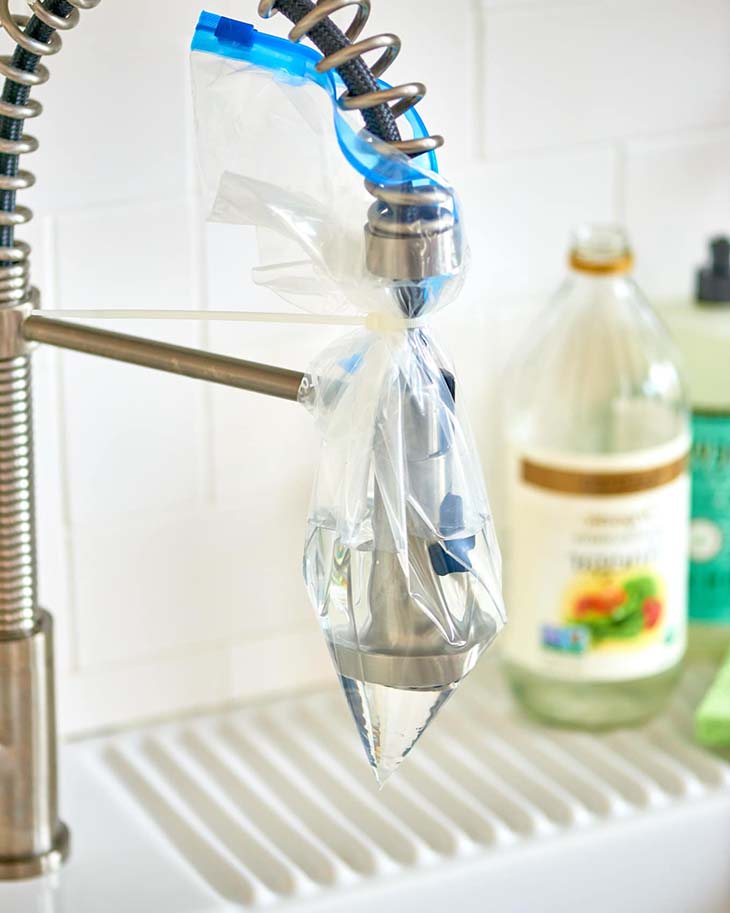
White vinegar technique to clean the faucet – Source: spm
Remove the shower head and moisten it in a container filled with 3 liters of water and half a liter of white vinegar. Let the object soak for a few hours until the scale has completely dissolved. Then remove the shower head and scrub it with a soft bristle brush. All you have to do is rinse the device.
If one of your faucets suffers the same fate as your shower head, the same principle applies. However, since it can’t be removed like a doorknob, hang a plastic bag filled with vinegar tightly and let it take effect. You can also make your sink brand new with simple tricks.
What if the pressure problem was elsewhere?
If the water pressure is low, it is important to first determine the source of the problem before deciding whether to seek help from a plumber.
Check the pressure of the rest of the taps in the house
Maybe the low pressure isn’t just about the shower head. In fact, if the pressure is also low at the kitchen sink and bathroom faucet, this may be a concern beyond the shower head. In this case, it may be wiser to call in a plumbing expert.
Check if the shut-off valve is open or closed to improve the water pressure.
Generally present in the bathroom, the shut-off valve serves, as its name implies, to quickly shut off the water in the house . If you have a blind, turn it to the left side to open it. If it is a ball valve, the lever must be parallel to the main water line.
Run hot and cold water separately to control water pressure.
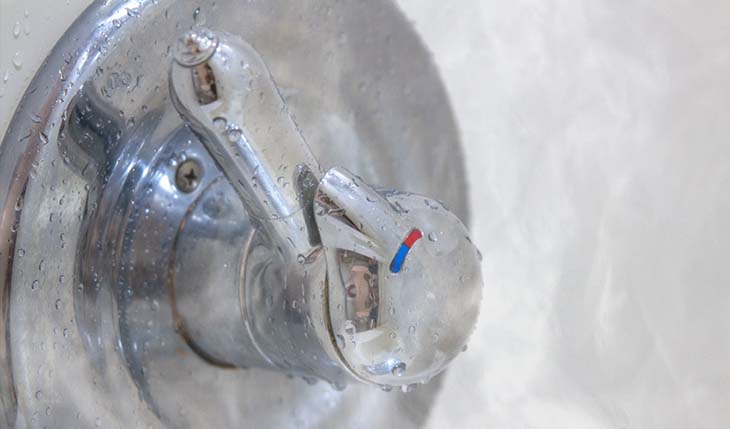
Mixer – Source: spm
Hot water pressure can drop if the water heater is not working properly while cold water pressure remains intact. If this is the case with other fixtures, it may be best to contact a plumber to repair the water heater.
Adjust pressure regulator
Since water providers pump water at very high pressure, the plumbing system in our homes needs to channel it with a pressure reducing system. This is why most homes have pressure relief valves that are used to limit the pressure of the water as it enters your home through the main water line.
To adjust them, get a socket wrench to turn the nut on top of the pressure relief valve, and then turn it clockwise to set the pressure . However, avoid loosening it too much, as this could damage the operation of your appliances.
Inspect pipes to fix pressure problem.
Your best option here is to hire a professional to inspect your pipes and do a deep drain cleaning. These may have accumulated limestone and limestone as well as minerals that will have made pressure difficult. Solving the problem, it is also possible to enjoy a high pressure shower.
Check for leaks affecting water pressure.
Sometimes it can be hard to spot small leaks if you don’t see them in your pipes. For your faucets, they can be attached to the water outlet joint or nozzle. If so, arm yourself with a wrench to tighten it.
You may also have experienced leaks or water leaks if you notice the following marks on your walls: peeling paint, yellow stains on the countertop, or even damp spots. In this case, the cause is probably the tube. If your toilet makes a hissing noise, it’s a toilet leak.


