

Is it conceivable to multiply roses utilizing just a humble potato? The charm of this method lies in its simplicity and the potential to witness an abundance of blooming roses.
Renowned for their elegance, fragrance, and myriad hues, roses captivate enthusiasts worldwide. For those intrigued by the prospect of reproducing roses with a single potato, horticultural experts unveil an innovative and enjoyable technique—one that beckons to be explored persistently until the roses flourish abundantly.
The Process of Rose Reproduction with a Potato
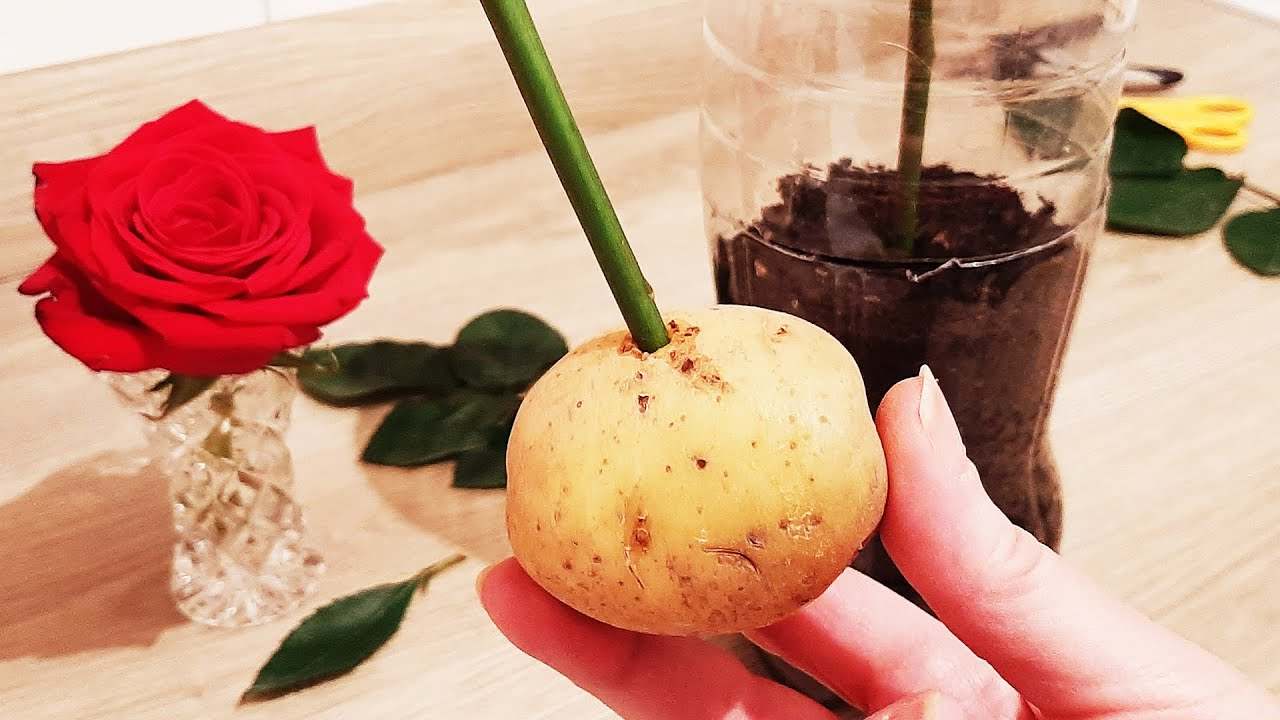
Seasoned nurserymen elucidate straightforward methodologies suitable even for those not inherently possessing a green thumb. The initial step towards cultivating everlasting roses involves obtaining cuttings measuring approximately 20 cm. Choosing a mature plant that has previously blossomed is crucial. Employing sanitized and sterilized shears—sanitized with denatured alcohol—is essential for a clean, oblique cut. These cuttings find temporary residence in a glass of water until the potatoes are prepared to embrace them.
Inducing Rose Bloom with Potatoes
The variety of potatoes chosen is inconsequential, yet fresh ones devoid of dark spots are preferable. Crafting a hole approximately 2cm deep in the center of the potato—with the aid of a pencil—marks the next stage. The cutting, dipped into the potato with a sprinkling of cinnamon to aid reproduction, is ready for the subsequent phase. Selecting sizable pots and filling them with all-purpose potting soil, the potatoes find a new home at the soil’s center, with the cutting extending above the surface. Facilitating seedling growth, perhaps with the shelter of a plastic bag to shield against heat and humidity, proves instrumental. Daily removal of the cover allows the seedling to breathe.
The journey doesn’t conclude here; vigilant observation of plant growth commences. Typically, within two weeks, discernible roots and their progression become apparent, courtesy of the potato serving as a vital nutrient source. Optimal conditions, including indirect sunlight and temperatures surpassing 20°C, foster robust growth. Sustaining consistently moist soil devoid of water stagnation, achieved by frequent saucer drainage, is imperative. At this juncture, the plant is poised for transplantation into the garden or an appropriately sized pot.
It merits emphasis that not all rose varieties lend themselves to this propagation method. Certain breeds may not yield robust roots conducive to fostering new seedlings. Seeking guidance from a trusted nurseryman is prudent to navigate this aspect effectively.


