

Sansevieria or mother-in-law’s tongue is an easy-care houseplant. This succulent perennial is characterized by its evergreen foliage in a stiff tuft. Sansevieria is grown in pots or planters. On the other hand, its growth is slow and it needs many years to flower. The propagation of this plant is done, among other things, by cuttings. Find out how to reproduce mother-in-law’s tongue from a leaf.
If your sansevieria is starting to wilt or you just want to have more, you can propagate it by leaf cuttings. That is to say, by taking a leaf from the mother plant, you will be able to obtain new sansevieria.
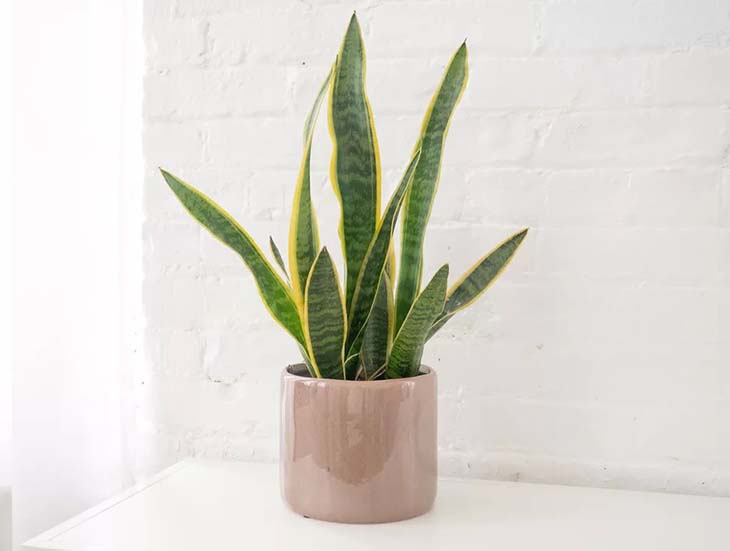

Sansevieria – Source: spm
How to reproduce sansevieria from a leaf?
-
Leaf cuttings in the ground
Step 1 :
Using pruning shears that have been cleaned and disinfected beforehand, take a leaf from your plant and place it on a board.
2nd step :
Cut the removed leaf into small sections, about 8 cm and make a small incision on the base of each section and more precisely on the end . This marking will let you know which end to poke into the ground. Indeed, to successfully root the cuttings, the end of the cutting that was closest to the pot must be planted in the ground, before cutting, in order to respect the direction of leaf growth.
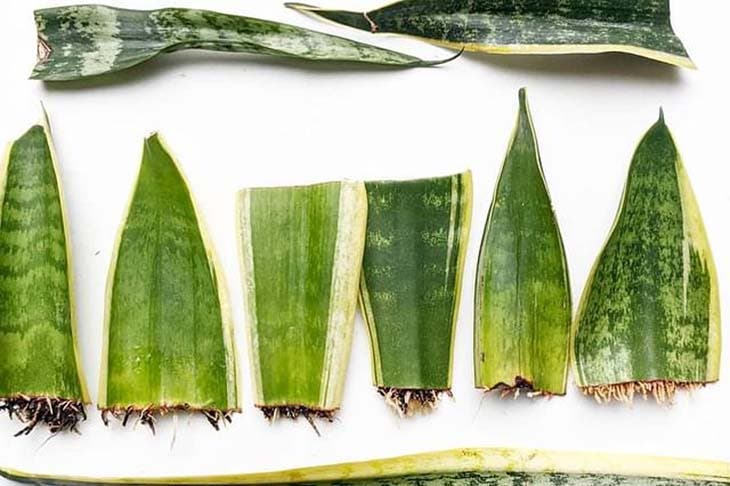
Sansevieria cuttings – Source: spm
Allow your cuttings to dry out for one to three days to prevent them from rotting. If you wish, you can sprinkle a little rooting hormone on the end of these cuttings to heal the cut and promote rooting.
Step 3:
Choose a terracotta pot and place clay pebbles at the bottom to promote drainage. Then compose your substrate by mixing the potting soil with the sand.
Step 4:
Plant the cuttings in the center of the pot, and lightly water the substrate.
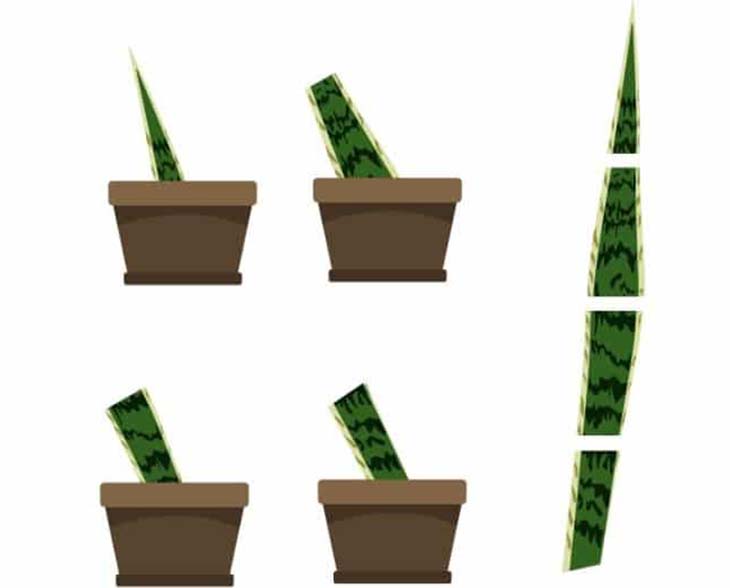
The right way to plant cuttings – Source: spm
Step 5:
Make a mini greenhouse for your plant. To do this, cut a plastic bottle in half and place the upper part on the jar, keeping the cap closed. Remember to remove the cap for at least 10 minutes a day to avoid condensation inside the bottle . Take the opportunity to lightly mist the substrate. After a month, you will notice the growth of small leaves. In this case, remove the bottle and transplant the young shoots into new pots.
-
Leaf cuttings in water
Take a leaf of your sansevieria and cut it into sections. Immerse your cuttings in a container of water, being careful not to turn them over. They must be slid into the water respecting the same direction as they had before cutting. Keep your container in daylight, but avoid direct sunlight . Change the water as soon as it becomes cloudy.
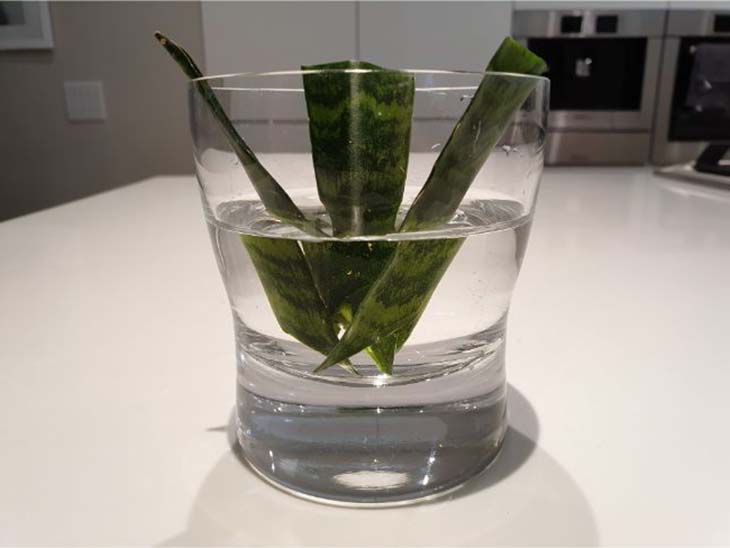
Sansevieria cuttings in water – Source: spm
New roots will appear in the second or fourth week. Wait until they are more numerous to transplant the cuttings into pots.
Note that even if you take cuttings from the leaves of a variegated sansevieria, you will end up with all-green sansevieria without yellow stripes. To reproduce a sansevieria with variegated foliage, you must opt for another propagation technique, namely the division of the clumps and rhizomes of the sansevieria.
How to take care of sansevieria?
-
watering
Only water your plant when the soil is completely dry. Indeed, this succulent plant has the ability to retain water thanks to its fleshy tissues , and therefore it can survive in arid climates or dry soils. That said, in the winter you can reduce watering your plant to once a month. Also remember to remove stagnant water in the saucer or cache-pot. Too much water can cause its roots to rot.
-
Temperature and humidity
The sansevieria likes heat and humidity. Keep your plant away from drafts and heat sources like the radiator or fireplace, which dry out the surrounding air.
-
Soil and fertilizer
The sansevieria likes sandy soil. Choose a potting mix for your plant mixed with a little sand. Fertilize your plant during its growth period, preferably with a cactus fertilizer or a slow-release liquid fertilizer, diluted in the watering water. Avoid any fertilizer application in winter.
-
Exposure
The sansevieria appreciates light, but without direct exposure to sunlight. A lack of light can make its foliage pale.
-
Diseases and Parasites
Sansevieria is disease resistant, but it can be attacked by mealybugs. In case of infestation, clean its foliage with a cloth soaked in methylated spirit or soapy water and then rinse with clear water.
From a single leaf you will be able to multiply your sansevieria. In addition to bringing a tropical touch to your interior, this decorative plant is also effective in purifying and cleaning the air in your interior.


