

Frost in the freezer can make it difficult to open the drawers and increase the electricity bill. Some freezers, like the upright freezer, have automatic defrost technology. But in other appliances, manual defrosting is essential to optimize food preservation in the freezer and save energy. Defrosting, while dreaded by many people, is a task that can be done in no time when you know the right tricks. Find out how to quickly defrost your freezer with this method.
If frost builds up in the refrigerator or freezer, this can result in high energy consumption. And for good reason, the layer of ice makes your device work hard and can be one of the factors that inevitably increase your electricity bill. If you have a refrigerator and/or freezer that doesn’t have antifreeze technology, here’s how to quickly remove excess frost.
The consequences of frost in the refrigerator and freezer.
Frost formation in a refrigerator or freezer occurs when moisture enters these appliances.


Too much frost can prevent drawers from opening – Source: spm
When you open the refrigerator to take out or store food, moisture can get inside. Also, even fresh food stored in appliances can release moisture. Upon contact with cold, this phenomenon leads to the formation of frost. However, too much frost can damage your appliances. In fact, the frost leaves an insulating layer on the walls of the freezer or refrigerator. Therefore, it can cause a decrease in heat transfer between the cooling system and the air inside the appliance. Outcome? The device has to work longer to maintain an optimal temperature (5°C) and involves considerable energy consumption. To this is added a rapid deterioration of the apparatus and an alteration in the conservation of food.
The method to quickly defrost a freezer.
If your freezer is producing too much frost and your energy bill seems too high, it’s time to defrost. These are the steps to follow to defrost the appliance:
-
Remove food from refrigerator and freezer.

You need to empty your device – Source: spm
Start by removing food from the refrigerator and freezer and placing frozen items in another freezer. Fresh produce in the refrigerator can be stored in insulated bags.
-
Put towels on the floor and a container in front of the drain.
Place a deep bowl or plate in front of the drain to collect the water that comes out after defrosting. Also have towels to not complicate the task
-
turn off the device
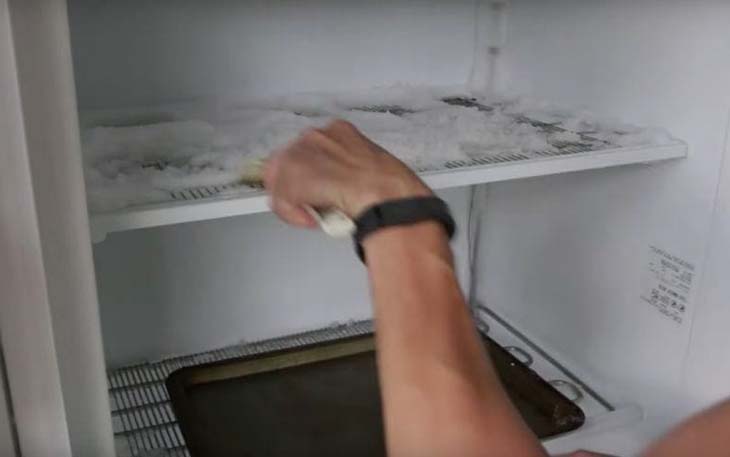
A spatula to remove the frost – Source: spm
Unplug the device and use a plastic spatula to remove the ice from the walls.
-
Remove refrigerator and freezer drawers

Remove the drawers – Source: spm
If you have managed to remove part of the frost that is blocking the opening of the drawers, remove them from the appliance to continue defrosting
-
Put hot water containers inside

A bowl of hot water to melt the frosting – Source: spm
To speed up the process, place pans of hot water in each freezer compartment so that the water vapors melt the ice.
-
Clean your device

Fridge-freezer cleaning – Source: spm
Once all the frost has been removed, clean the device. To do this, use a cloth moistened with a cup of water and a tablespoon of baking soda. If your appliance has tough stains, add white vinegar and gently rub for a perfect clean. Leave the doors open until the appliance is dry.
-
Reconnect your device

A tidy fridge – Source: spm
Plug the device back in and organize the drawers. Let it sit for a good hour before putting the food away.
-
save your food

Food preservation – Source: spm
Finally, put away foods that should be in the refrigerator or freezer.
Now you know how to defrost the freezer. For optimum maintenance of the appliance, it is recommended to defrost every four months.


