

Let’s find out how to grow parsley properly, by following a few little rules to get a productive and healthy seedling.
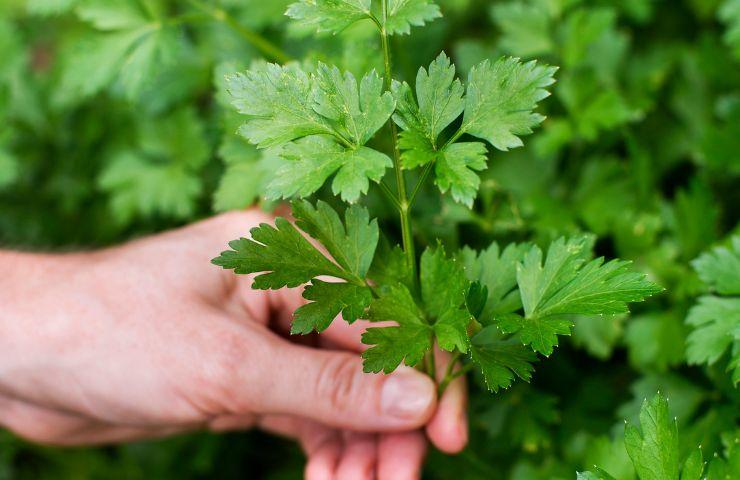
Parsley is one of the most exploited smells in the kitchen, a versatile vegetable capable of embellishing many dishes, especially belonging to Mediterranean cuisine. In addition, it is a beautiful plant to look at, which gives off a delicious aroma in the environment, perfect for storing in the kitchen or balcony. However, as in the case of other aromatic herbs, such as basil or rosemary, keeping it healthy for a long time is not easy.
Often, in fact, this tends to dry out or not produce leaves. It has blocked growth, a sign that something is patently wrong with the crop. So how can this be remedied? First of all, a warning that not everyone knows: parsley has mild levels of toxicity, so you should never exaggerate the amounts, otherwise it could cause stomach cramps and liver problems. Consumed in limited doses, however, it has many benefits.
How to properly grow parsley and make it productive and healthy.
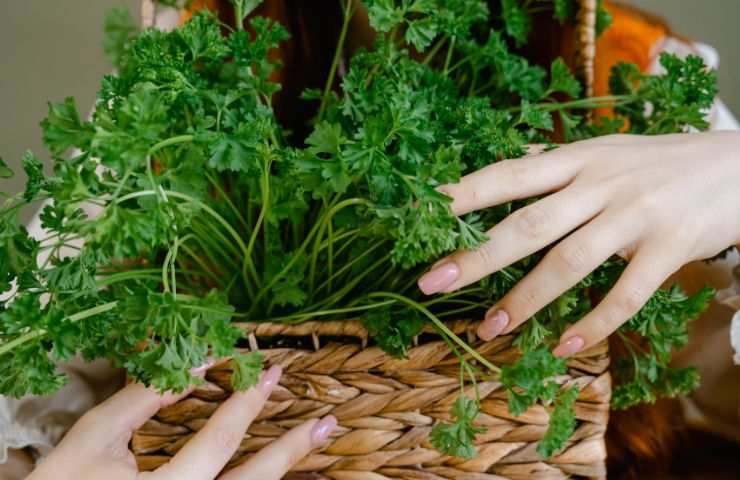
The first rule to follow to grow parsley well is its potion. This plant needs brightness, but also shade. It is a common misconception that, being an aromatic plant, parsley needs direct sunlight. Ideally, you should place it in a place in partial shade, otherwise it will dry out. You should sunbathe early in the morning and then stay in the shade for the rest of the day.
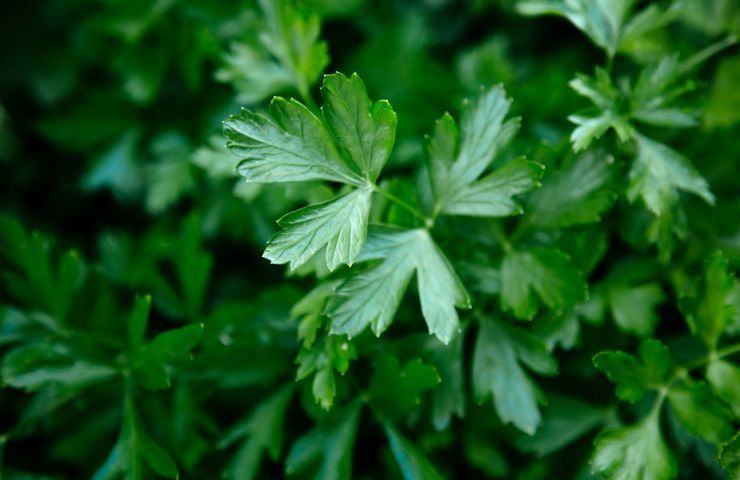
It is watered early in the morning or in the evening, after sunset, without wetting the leaves. As for the soil, parsley needs numerous nutrients, hence nitrogen, phosphorus and potassium. In universal soil it is best to mix manure or granular or organic fertilizers. In the garden, you can fertilize directly with compost and fresh manure. Many also make a mistake in leaf picking.
The leaves of parsley are not picked from the top, leaving the stem empty, because in doing so, the stem that remains, dries out and dies. When harvesting parsley, you should collect the entire stem, separating it 3 cm from the base, to stimulate new shoots. In addition, it is always better to collect the most developed stems, letting the small and young ones grow. Here is the correct conservation of the leaves.


