

Geraniums are plants that need a lot of sun, so if you have any seedlings, you should place them in a place where they will get plenty of light outside. They are plants that resist heat very well and can withstand temperatures above 30ºC. In summer, put the plants outdoors so that they receive direct light, in fact the geranium is one of the best plants for balconies and terraces. In winter, place the geranium inside, next to a window where the sun shines. It’s not a plant that needs a lot of water, so you can place it near a radiator without it being affected.
To make geraniums bloom, you need to give them at least 6 hours of light per day. If your geranium isn’t blooming, check that it’s not in a spot where there’s too much shade.
How to water a geranium: the tricks to prevent it from rotting!
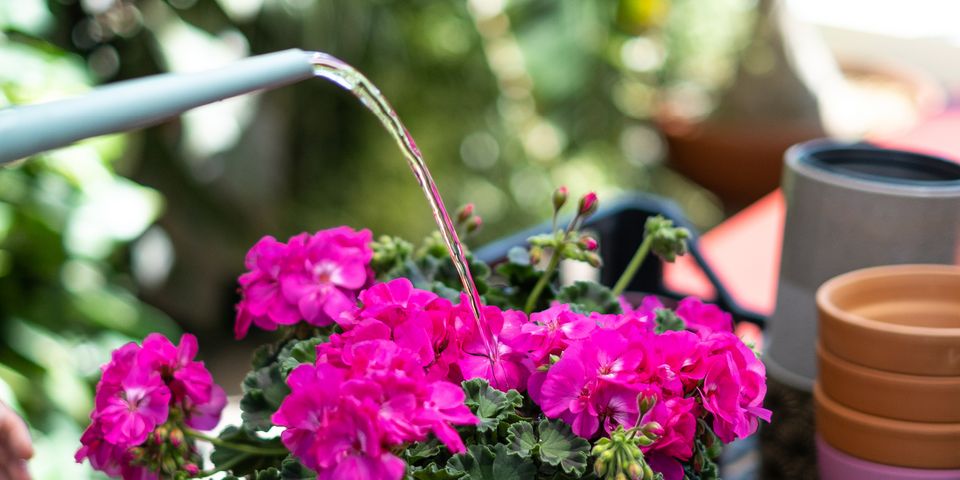
Be careful with watering geraniums. The care of this plant varies greatly from winter to summer, and when it comes to watering it is no exception. In the warm season you will need to water your geranium 2 or 3 times a week, while in winter once a week will be more than enough.
In fact, if you live in a humid environment, you should check the moisture in the soil to understand when to water it. There are times when it is enough to water abundantly every 15 days. If your geranium isn’t blooming, it’s because maybe you’re watering it too much. Try to space out the watering, giving them plenty of water each time, but less often.
Caring for geranium leaves is also tricky. The water that falls directly on their leaves and flowers causes them to rot. Keep careful when it rains that the rain doesn’t directly wet your geraniums. Similarly, when watering them, make sure that the water goes directly into the soil without touching the leaves or flowers of the geranium.
How to prune a geranium for a beautiful and abundant bloom.
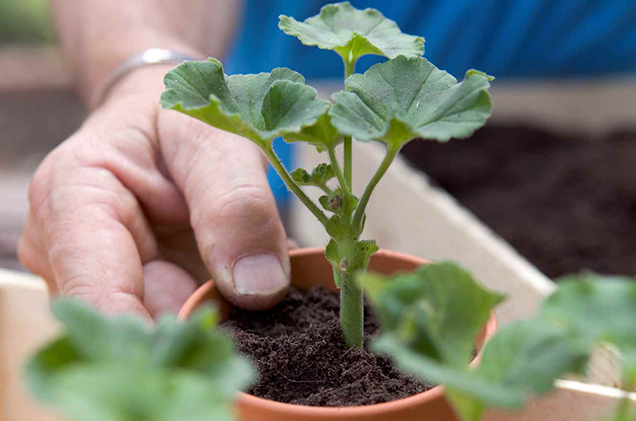
Geranium pruning should be done constantly. As with most plants, wilted leaves and flowers prevent new ones from blooming. But as we have already mentioned, the leaves of this plant are delicate, so they need constant care. Remove any yellow or dried pieces as soon as you see them from both the soil and the stem itself. It is also recommended to cut off the tips of the dried stems, to improve air circulation in the plant and make the geraniums bloom again.
If you thoroughly prune your geranium in winter, you’ll help it withstand the cold better (less wilted leaves) and get it ready to bloom as soon as temperatures rise in spring. When winter is over, prune your geranium from below so that new flowers will emerge from there.
Remember that the flowering time of the geranium is from May to September, so if you want to separate a cutting to create new plants, the best time to do so is between February and March or between August and October.
How to fight pests in geranium: use a good fertilizer.

Geraniums are plants that are vulnerable to pests. Be especially careful with the geranium butterfly by regularly checking for holes in the branches of your geranium. Also check the leaves for the possible presence of fungi and treat them quickly as soon as you notice that the plant has been attacked. Don’t panic if you see that your geranium suddenly has yellow leaves: it’s due to lack of iron.
You can solve this problem by placing pieces of eggshell around the plant. The egg has many minerals that will strengthen it. If the fungi don’t disappear from the plant, try giving your geranium an iron supplement that is sold in specialty stores.
Since geraniums are delicate plants (especially with regard to water and pests) it is good to use fertilizers regularly. There are many types of fertilizers – try to use one that gives them strength and helps them resist pests. Consult a specialty store and apply fertilizer to your geranium once every 15 days.


