

Did you know that you can get abundant flowers and roots from the orchid if you do this process 1 time a month? Let’s find out what procedure it is and how to perform it!
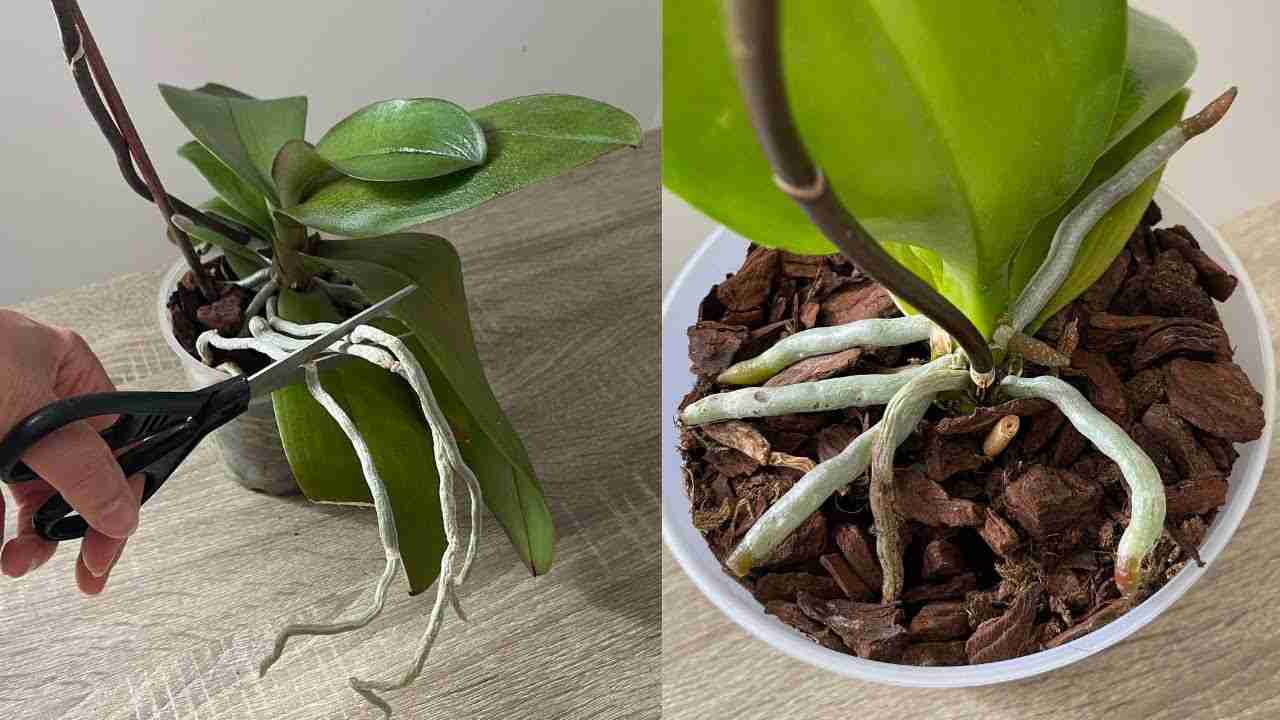
There is a process that allows you to get abundant flowers and roots from the orchid if you apply it 1 time a month. What is the procedure? The procedure concerns the aerial roots of the orchid, which should be treated in the same way as those in the pot. Let’s find out what to do to have abundant roots and flowers!
Why the Orchid Produces Aerial Roots
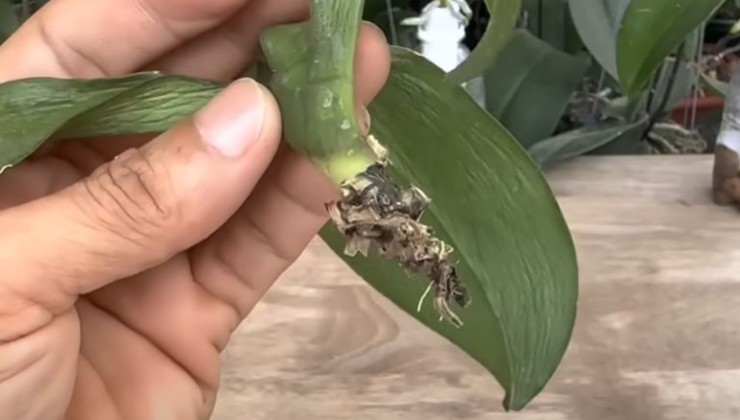
The aerial roots produced by orchids are a completely normal process for these plants, in fact they inherit this trait from genetic factors belonging to the species from which they come.
These roots have the function of absorbing water and nutrients and further strengthening the plant to the soil, in addition to contributing to photosynthesis, even minimally. The behavior does not change when the plant is in the pot.
The roots of the orchid seek water and footholds from multiple sources, in order to ensure survival. Let’s say that they act like this by instinct, naturally, and it is good that the orchid does not produce more roots, since it feeds on the aerial ones.
This usually happens because the soil is not good for growing orchids, and therefore root production is concentrated outside the pot.
What to Do with Orchid Aerial Roots
The aerial roots of the orchid should not be cut, but preferably moist to stimulate their growth. To prevent them from going to the ground, it is advisable to put the pot in a larger one so that it is higher and insert the aerial roots in a plastic cup with water. As the water is absorbed, fill the glass to give them the necessary nutrition.
As already mentioned, orchid roots that come out of the pot should never be cut except when they are dry and dead. These roots add charm to the plant and testify to its good health. In fact, if the orchid has aerial roots outside the pot it is very likely that they have not suffered from water stagnation, so they are certainly healthy.
Avoid planting aerial roots as there may be a risk of non-adaptation to the bark and therefore they may die. Another trick is to spray water on the aerial roots, to help the plant stay hydrated.
When to Transplant Orchid Aerial Roots
If you don’t want to see these roots outside the plant, replant them, but don’t cut them back. Before transplanting them, however, you need to get the aerial roots of orchids used to a higher rate of moisture that you will find in the soil. Here’s how:
- Wait for the right time to transplant the orchid;
- In the 2 weeks prior to transplanting, water vaporizes on the aerial roots;
- Be careful not to wet the stem and leaves;
- Steam the water 2 times a day and then increase to 4-5 times.
The roots in this way get used to the increase in humidity and will take root well in the substrate.
Get More Orchids From Aerial Roots
You can also get other orchids from aerial roots. If they are too many and healthy, cut the orchid on the side of the stem with sharp scissors and separate it from the root. Plant the aerial roots in a separate pot and add a tablespoon of ground cinnamon, making sure it ends up on the cut part, to disinfect it.
At this point put some balls of clay to plant the other orchid, put it inside the pot and add the soil. Leave it half an hour in hydrogen peroxide so that the roots soften.
Put pine and moss on top to feed the plant and make it grow and develop at its best. You’ll see your orchids develop lush and produce lots of beautiful, and abundant, blooms too! As you can see, the aerial roots of the orchid are very important, and you can only cut them if you have to!


