

Indoor plants with decorative foliage are ideal for decorating the house and giving it an exotic touch. Some plants are easy to care for. They require little water and are, moreover, resistant. They have the ability to protect themselves from parasites and cryptogamic diseases that attack it. These plants are particularly suitable for people who do not have a green thumb. Discover these 3 very resistant indoor plants to decorate your home.
To brighten up your interior all year round, opt for hardy indoor green plants. These have the advantage of resisting the attacks of pests and therefore of lasting a long time.
What are the 3 resistant houseplants?
-
The sansevieria
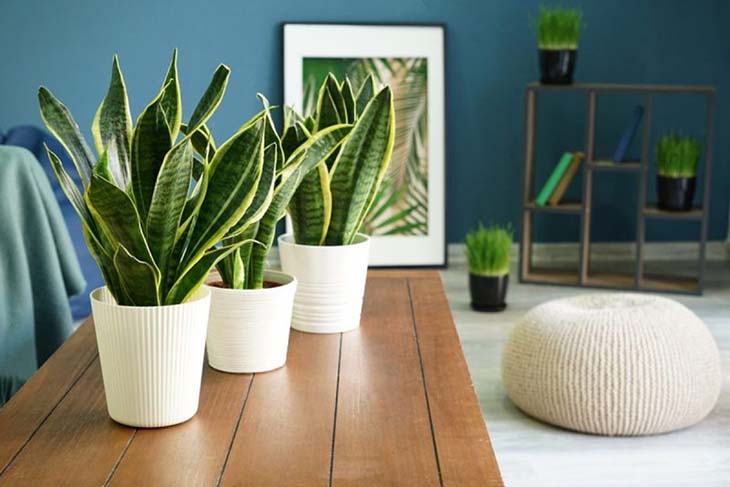

Sansevieria – Source: spm
The sansevieria or mother-in-law’s tongue is a perennial plant with evergreen olive green or variegated foliage, that is to say bordered with yellow. This succulent plant can be grown both in pots and in planters. In addition to decorating your interior, the sansevieria is effective in purifying the surrounding air. Indeed, thanks to its depolluting properties, it can absorb toxins such as benzene which comes from paint and varnish, or trichlorethylene which is released from certain cleaning products.
To care for your sansevieria, keep it away from drafts and heat sources like the radiator. Only water your plant when the soil is dry. This succulent plant has the ability to retain water thanks to its fleshy tissues. Reason why it is necessary to reduce watering in winter. Regarding the substrate, choose a soil for cacti, mixed with a little sand. The sansevieria appreciates a sandy and drained soil. Avoid fertilizing your plant in winter. You can reproduce your sansevieria easily by cutting the leaves or by dividing the clumps and rhizomes.
The sansevieria can be subject to attacks by mealybugs. In this case, clean its foliage with a cloth soaked in soapy water, and rinse with clear water.
-
Beaucarnea
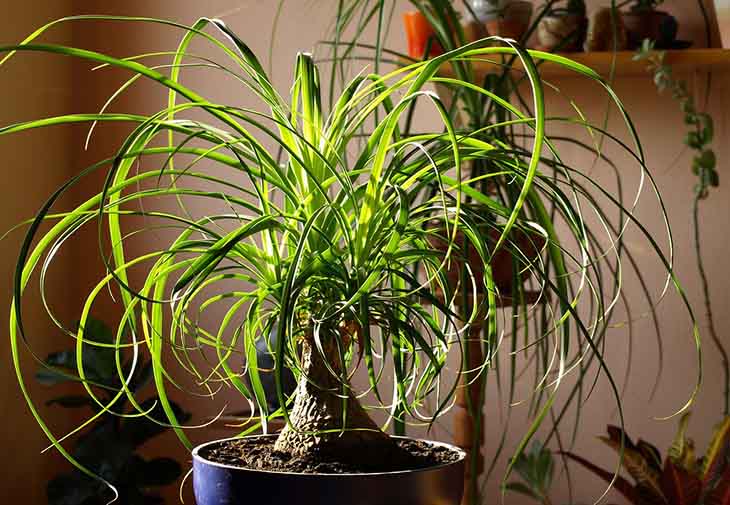
Beaucarnéa – Source: spm
Originally from Central America, the Beaucarnea is an easy-care houseplant. It is nicknamed elephant foot because of its massive trunk. Beaucarnea is a perennial succulent with evergreen foliage. Its growth is slow and its flowering gives beautiful yellow or white flowers. This plant appreciates a neutral and stony soil, or composed of humus. Concerning its maintenance, the Beaucarnea requires little water. Indeed, one watering per month is sufficient for Beaucarnea to flourish. In periods of high heat, you can slightly increase the frequency of watering, to twice a month. On the other hand, in winter, water your plant only when its leaves dry up. Too much can cause the roots to rot. This is why it is advisable to place clay balls or a bed of gravel at the bottom of the pot. This promotes drainage and prevents rot. If you notice that a cottony mass has formed on the foliage, know that your Beaucarnea has suffered a scale insect attack. In this case, you must treat your plant as soon as possible to avoid contaminating the rest of your plants. Repot your plant approximately every 3 years. When repotting, replace the basic pot with a slightly larger one, because the Beaucarnea must remain cramped.
-
The aspidistra
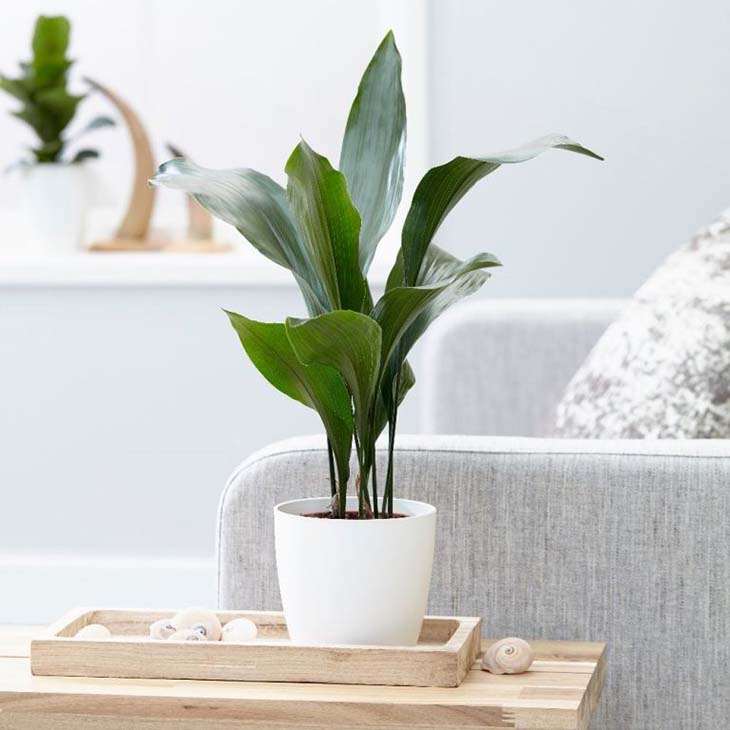
The aspidistra – Source: spm
Aspidistra is a perennial, evergreen plant native to Japan and China. It is one of the hardiest green plants. Moreover, it is so robust that the English had nicknamed it “plant in wrought iron”. This nickname was also given to it because of the shape of its flowers in small shields. The aspidistra is ideal for houses with little light. Indeed, the aspidistra needs an exposure to partial shade to flourish. Direct sun could scorch its leaves. Water your plant twice a week in the summer. The frequency should be reduced in winter. Indeed, only water the aspidistra every 2 weeks during this cold period of the year. It is also advisable to mist the foliage from time to time. Choose non-calcareous spring water for your plant, and don’t forget to remove excess water from the saucer or cache-pot. To promote drainage, opt for a pot with holes and place a layer of sand or gravel at the bottom. This plant also appreciates drained and light soils. Choose a potting soil for green plants for your aspidistra. Note that its multiplication is done by division of the rhizome. The pests that can attack your plant are mites.
Thanks to these resistant and easy-care indoor plants, you will be able to brighten up and decorate your interior all year round!


