

Useful for decorating the house, indoor green plants have many advantages. They are effective in keeping the surrounding air clean. Some depolluting plants purify the indoor air, while others manage to retain dust thanks to their foliage. Check out these 3 indoor plants that eliminate dust and help keep your home clean.
Some houseplants have depolluting, but also dust-removing properties. Their foliage is effective at trapping airborne dust.
What are the 3 plants that remove dust from the house?
-
The rubber plant
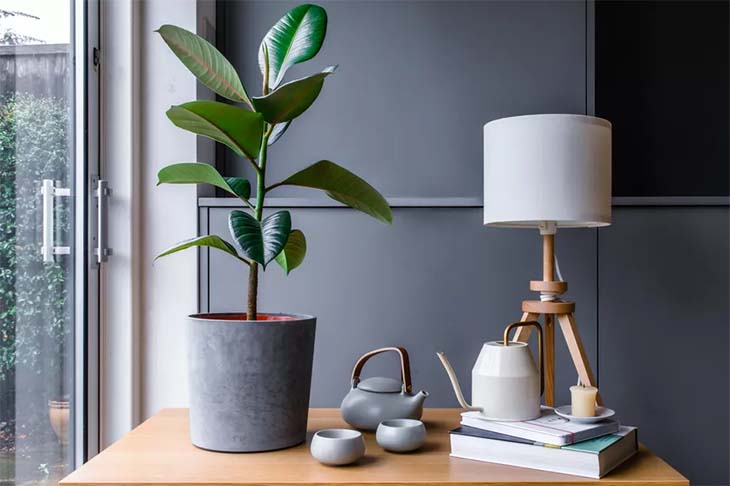

Ficus elastica – Source: spm
The rubber tree, also called rubber or ficus elastica is a perennial plant, with evergreen leaves, from the Moraceae family. Rubber is a depolluting plant that purifies the air of formaldehyde from, among other things, glues, varnish and insulation. In addition, the large sheets of the rubber help trap dust particles in suspension. Clean the foliage often with a dampened microfiber cloth, to increase the dusting action of your plant.
To take care of your plant, place it in a bright room, but avoid exposure to direct sunlight and favor partial shade. Ficus elastica is a tropical plant that likes heat and humidity. It needs a temperature between 15 and 25°C, and mist its foliage regularly. Regarding watering, water the soil as soon as it becomes dry, but without excess. Prefer non-calcareous water, at room temperature.
If your rubber tree loses its leaves, it may be due to a lack of light, insufficient watering, or even roots soaked in water. The rubber tree can also be attacked by pests. If you notice white marks on the foliage, it means that your plant has been infested with mealy bugs. If the leaves turn yellow, it means that the rubber has been attacked by spider mites.
-
The spider plant
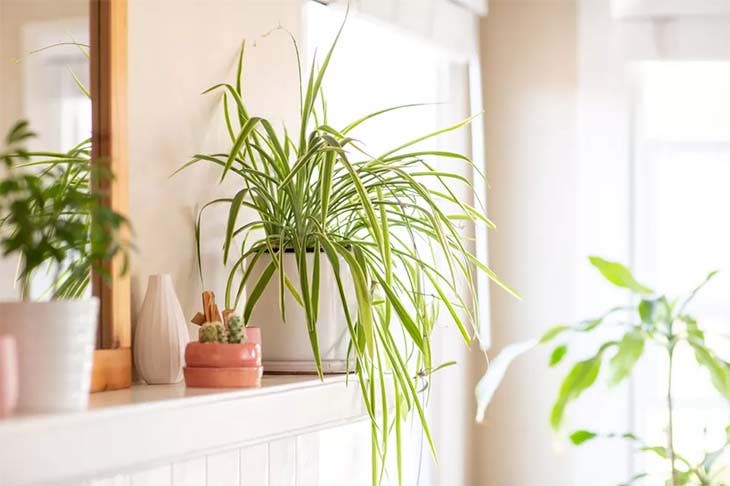
The spider plant – Source: spm
The chlorophytum or spider plant is a perennial plant, native to South Africa. This plant of the agavaceae family is robust and easy to maintain. It is effective in eliminating household toxins such as toluene, benzene, carbon monoxide, xylene and formaldehyde. Although chlorophytum does not have broad leaves like rubber, it can trap dust with its dense, clumping foliage.
The spider plant appreciates an exposure to partial shade. It prefers a neutral, drained and clayey or humus-rich soil. Regarding watering, the spider plant appreciates slightly moist soil. In fact, over-watering can cause the roots to rot and kill the plant. After each watering, remove stagnant water from the saucer or cache-pot. Also, favor non-calcareous spring water, and mist the foliage regularly. The chlorophytum indeed needs humidity. The tips of its leaves may turn brown if the air is dry.
Fertilize your plant during the growth period with a liquid fertilizer, and repot it as soon as its roots exceed the size of the pot.
Spider plant is generally hardy, but it can be attacked by aphids, whiteflies and spider mites. In case of infestation, simply rinse the plant with water.
-
Ivy, the decorative foliage plant
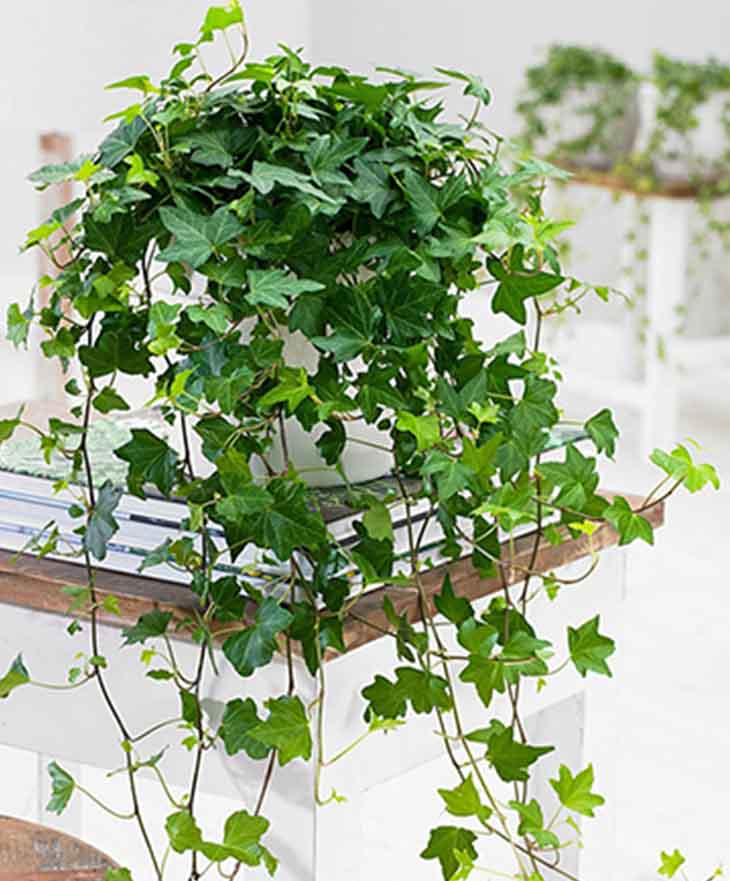
Ivy – Source: spm
Ivy is an evergreen perennial plant. Its decorative foliage can be creeping or climbing. This resistant and rustic vine supports frost and cold. Thanks to its purifying action, ivy removes toxins from the air, such as carbon monoxide produced by heating appliances. In addition, all varieties from ivy have the ability to collect dust in suspension.
Ivy is easy to care for and doesn’t need much care. It is satisfied with little watering during its growth, and in winter, it does not need to be watered. Ivy, on the other hand, loves humidity. Add mulch to the soil in the spring to keep the soil moist. Fertilize your plant every 15 days, with a liquid fertilizer, during its period of vegetative growth. Also, remember to repot the young plants every year.
These easy-to-care-for indoor green plants will not only purify the surrounding air, but also eliminate airborne dust.


